
Specification of Hydrated Lime Ca(OH)2
| Purity of Ca(OH)2 | 90 to 95% | 85 to 90% | 80 to 85% | 75 to 80% | Volatile mater at 105c | 0.5 | 0.2 | 0.1 | NIL |
|---|---|---|---|---|
| Acid Insoluble (SiO2) | 0.04 | 0.2 | 0.5 | 0.1 |
| Iron (Fe2O3) | NIL | NIL | NIL | 0.08 |
| Magnesia (MgO) | 0.01 | 0.01 | 0.01 | 0.01 |
| Alumina (Al2O3) | NIL | NIL | NIL | NIL |
| Fineness (Mesh) BSS | 400 | 400 | 350 | 300 |
Specification of Quick Lime (Cao)
| Purity of Cao | 90 to 92% | 85 to 90% | 80 to 85% | 75 to 80% | Volatile mater at 105c | NIL | NIL | NIL | NIL |
|---|---|---|---|---|
| Acid Insoluble (SiO2) | 0.04 | 0.2 | 0.5 | 1.2 |
| Iron (Fe2O3) | NIL | NIL | 0.03 | 0.08 |
| Magnesia (MgO) | 0.01 | 0.01 | 0.01 | 0.01 |
| Colour of Quick Lime Lumps | Snow White | Snow White | Snow White | Snow White |
Specification of Low grade Hydrated Lime
| Purity of Ca(OH)2 | 40 to 50% | 50 to 60% | 60 to 70% | 70 to 75% | Moisture Contents | 0.1 | 0.1 | 0.1 | 0.1 |
|---|---|---|---|---|
| Silica(SiO2) | 2.4 | 2.0 | 1.8 | 1.5 |
| Iron (Fe2O3) | 2.0 | 1.5 | 1.2 | 1.0 |
| Magnesia (MgO) | 1.0 | 1.0 | 1.0 | 1.0 |
| Alumina (Al2O3 | NIL | NIL | NIL | NIL |
| Fineness (Mesh) BS | 150 | 170 | 200 | 250 |
| Colour of Powder | Dull with black particles | Dull | Yellowish white | Yellowish white |
Specification of Paint Lime Ca(OH)2
| Purity of Paint Lime | 60 to 65% | 65 to 70% | 70 to 75% | 75 to 80% | Moisture Contents | 0.1 | 0.1 | 0.1 | 0.1 |
|---|---|---|---|---|
| Silica(SiO2) | Tracers | Tracers | Tracers | Tracers |
| Iron (Fe2O3) | Tracers | Tracers | Tracers | NIL |
| Magnesia (MgO) | Tracers | Tracers | Tracers | NIL |
| Alumina (Al2O3 | Tracers | Tracers | Tracers | NIL |
| Fineness (Mesh) BS | 300 | 350 | 375 | 400 |
| Colour of Paint Lime | Off White | White | Snow White | Super Snow White |
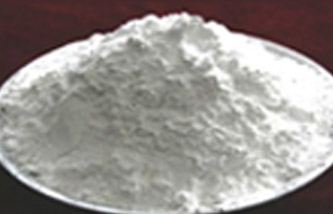
Lime / Lime Stone
Hydrated Lime
Hydrated Lime: It is free flowing fine powder, free from grits and impurities manufactured in our most modern fully automatic plants under close supervision of highly qualified and trained staff
Calcium Hydroxide/Hydrated/Slaked Lime
| Calcium Hydroxide | Ca(OH)2 | 96% | 94% | 92% | 90% | 85% | 80% | 75% | 70% | Calcium Oxide | CaO | 72.5 | 71.0 | 69.5 | 68.0 | 64.0 | 60.5 | 56.7 | 62 |
|---|---|---|---|---|---|---|---|---|---|
| Calcium Carbonate | CaCO3 | 0.5 | 0.7 | 1 | 2 | 4 | 6 | 8 | 8 |
| Magnesium Oxide | MgO | 0.4 | 0.4 | 0.4 | 0.4 | 0.4 | 0.4 | 0.4 | 0.4 |
| Acid Insoluble | SiO2 | 0.1 | 0.1 | 0.2 | 0.4 | 1.2 | 2.5 | 4.0 | 4.5 |
| Alumina | Al2O3 | Trace | Trace | Trace | Trace | Trace | Trace | Trace | Trace |
| Iron | Fe2O3 | Trace | Trace | Trace | Trace | Trace | Trace | Trace | Trace |
| Chloride | Cl | Trace | Trace | Trace | Trace | Trace | Trace | Trace | Trace |
| Moisture | - | 0.2 | 0.2 | 0.3 | 0.5 | 0.5 | 0.5 | 0.5 | 0.5 |
| Mesh | (BSS) | 400 | 400 | 375 | 250 | 200 | 175 | 175 | 175 |
| Color | Snow White | Snow White | Snow White | Snow White | Snow White | Snow White | Snow White | Snow White | Snow White |
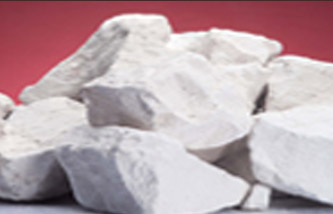
Quicklime
Quicklime (or calcium oxide or burnt lime) is obtained by calcining pure limestone at temperature above 9000C. This highly reactive product is essential to many industrial processes.
Calcium Oxide/Burnt/Calcined/Unslaked Lime
| Physical Shape | -- | Lumps | Lumps | Lumps | Lumps | Powder | Powder | Calcium Oxide | CaO | 92 | 90 | 85 | 92 | 90 | 85 |
|---|---|---|---|---|---|---|---|
| Calcium Carbonate | CaCO3 | 2 | 4 | 8 | 2 | 4 | 8 |
| Magnesium Oxide | MgO | 1.5 | 1.8 | 2 | 1.5 | 1.8 | 2 |
| Acid Insoluble | SiO2 | 0.1 | 0.1 | 0.2 | 0.4 | 1.2 | 2.5 |
| Alumina | Al2O3 | Trace | Trace | Trace | Trace | Trace | Trace |
| Iron | Fe2O3 | Trace | Trace | Trace | Trace | Trace | Trace |
| Chlorine | Cl | NIL | NIL | NIL | NIL | NIL | NIL |
| Size/Mash | (BSS) | 2-4" | 2-4" | 2-4" | 500 | 300 | 200 |
Limestone/Calcium Carbonate
| Calcium Carbonate | CaCO3 | 96.5 | 95 | Magnesium Oxide | MgO | 0.6 | 0.6 |
|---|---|---|---|
| Acid Insoluble | SiO2 | 1.0 | 1.6 |
| Alumina | Al2O3 | 0.1 | 0.12 |
| Acid Iron | Fe2O3 | 0.014 | 0.016 |
| loffon lgnition | -- | 43.9 | 43.5 |

Dolomite Lime
Dolomitic quicklime is the name given to the quicklime formed from calcining a natural dolomitic limestone that contains nearly an equal molar weight percentage of calcium oxide to magnesium oxide. Ideally, this quicklime would contain 56% calcium oxide, 40% magnesium oxide, and 4% other major lime impurities such as iron oxide, aluminum oxide, silicon dioxide, and sulfur.
Process: The production of high calcium quicklime (magnesium oxide) requires a large amount of heat, which is generated in the kiln environment. The quarried and sized high magnesium limestone travels through a rotary kiln and is subjected to these high temperatures where the calcium carbonate begins to dissociate with the resultant formation of magnesium oxide. The minimum temperature for the dissociation of calcium carbonate is 1648°F (898°C). For practical production purposes, however, the kiln temperature range is from an initial temperature of about 1750°F (954°C) to a final temperature of about 1950°F (1066°C). These temperatures can vary dependent upon the nature of the limestone being calcined.